
The Psychology Behind Chasing Losses

late night betting stress 300x300 - The Psychology Behind Chasing LossesChasing losses is one of the most common and destructive behaviors in sports betting. Almost every bettor recognizes it. Far fewer understand why it happens or how quickly it can spiral, especially after logging in through platforms like Jack Bet login and feeling pressure to recover losses immediately. On the surface, chasing looks like a simple mistake: betting more to recover what you just lost. Underneath, it’s driven by deep psychological forces that override logic, discipline, and even self-awareness. To stop chasing losses, you need to understand the mental traps that cause it in the first place.
The most potent force behind chasing losses is loss aversion. Psychologically, losses hurt more than equivalent wins feel good. Losing $500 feels far worse than winning $500 feels satisfying. That imbalance creates urgency. The mind wants to erase the pain as quickly as possible. That thought isn’t about value or probability. It’s about emotional relief. Loss aversion narrows focus. Instead of evaluating each bet independently, the bettor begins to view bets as tools to correct past outcomes. The previous loss becomes the reference point. Every decision is now anchored to getting back to zero. This is where logic starts to collapse. A bad bet doesn’t feel bad because it’s low quality. It feels bad because it didn’t solve the emotional problem the bettor wanted it to solve.

Ego Betting and the Need to Be Right

Another powerful driver of loss chasing is ego. Bettors don’t just lose money when a bet fails. They lose validation. A loss feels like proof that their read was wrong, their judgment flawed, or their confidence misplaced. Ego betting emerges when the bettor tries to reclaim that identity. Common ego-driven thoughts include:
  • “I know this team better than the market.”
  • “There’s no way this keeps going against me.”
  • “I can’t end the day like this.”
These thoughts aren’t about profit. They’re about restoring self-image. Ego betting often shows up as:
  • Doubling down on the same team or angle
  • Refusing to accept that the price is gone
  • Betting games purely to prove a point
The market doesn’t care about ego. It doesn’t correct itself to protect your confidence. Betting to defend identity instead of price is one of the fastest ways to compound losses.

The Illusion of Control

Chasing losses is fueled by the illusion of control. After a loss, bettors often believe they can “fix” the situation by being more aggressive, more active, or more decisive. It feels productive. It feels like taking action. In reality, control in betting is limited to:
  • What you bet
  • When you bet
  • At what price
You cannot control outcomes. Chasing losses confuses activity with influence. Placing more bets does not increase control. It increases exposure. And when exposure increases without edge, losses accelerate. The illusion of control makes bettors believe that doing something is better than doing nothing. Often, the opposite is true.

Mental Accounting and the “Get Even” Trap

Many bettors keep mental accounts without realizing it. They separate money into categories:
  • Today’s money
  • This week’s losses
  • “House money”
  • Money they’re “down.”
Once a bettor labels money as “lost,” future bets feel different. Risk tolerance increases because the goal shifts from growing a bankroll to repairing damage. This is why chasing often happens late in the day or after a bad run. The bettor isn’t betting with fresh capital in their mind. They’re betting with money that already feels gone. That mental framing leads to:
  • Larger stakes
  • Shorter decision windows
  • Lower standards for what qualifies as a “good bet.”
The get-even trap turns betting into emotional accounting instead of probabilistic decision-making.

Decision Fatigue Makes Chasing Easier

Chasing losses rarely happens in isolation. It’s often the result of mental exhaustion. After a long day of watching games, checking lines, and processing outcomes, decision quality drops. Emotional regulation weakens. Impulses get louder. At that point, the bettor is more likely to:
  • Accept bad prices
  • Bet on unfamiliar markets
  • Ignore their own rules.
Decision fatigue doesn’t feel like fatigue. It feels like urgency. The bettor wants closure, not accuracy. That’s when chasing sneaks in.

Why Chasing Losses Feels Rational in the Moment

One of the most dangerous aspects of chasing losses is that it feels justified while it’s happening. The bettor tells themselves:
  • “I’m still betting the same amount overall.”
  • “I just need one good result.”
  • “This is a high-confidence spot.”
The brain selectively filters information to support action. Warning signs are minimized. Past discipline feels irrelevant. This is why chasing losses often surprises bettors when they look back. In the moment, it didn’t feel reckless. It felt necessary. Psychology fills the gap where discipline breaks down.

The Long-Term Damage of Chasing

Chasing losses doesn’t just cost money. It damages the process. Over time, it:
  • Teaches bad habits
  • Breaks trust in one’s own system
  • Increases emotional volatility
  • Creates fear around normal variance
Even when a chase “works” and a bettor gets back to even, the lesson learned is dangerous. The brain remembers relief, not risk. That reinforces the behavior. Eventually, the chase fails. And when it does, the losses are often far larger than the original ones.

Breaking the Cycle

Stopping loss chasing isn’t about willpower alone. It’s about structure. Effective safeguards include:
  • Fixed staking rules that don’t change mid-session
  • Daily or session stop-loss limits
  • Mandatory breaks after emotional losses
  • Predefined criteria for placing bets
  • Tracking behavior, not just results
These systems remove decisions from emotional moments. The goal isn’t to eliminate emotion. It’s to prevent emotion from dictating action.

The Bottom Line

Chasing losses isn’t a math problem. It’s a psychological one. Loss aversion creates urgency. Ego demands validation. Mental traps distort judgment. Together, they push bettors into decisions they wouldn’t make in a calm state. Understanding these forces doesn’t make you immune to them. But it gives you a chance to interrupt the cycle before damage compounds.
In betting, discipline isn’t about being perfect. It’s about recognizing when your mind is no longer acting in your best interest. The most profitable decision after a loss is often the hardest one. Doing nothing.

How Bookmakers Build Margin Into Every Line

Focused on strategy and odds 300x300 - How Bookmakers Build Margin Into Every LineSports betting looks simple on the surface. Two teams. Two prices. Pick the right side and get paid. But every line you see already includes a built-in cost. That cost is the bookmaker’s margin. It’s subtle, constant, and unavoidable unless you know where to look. Understanding how margin works is the first step toward betting smarter, whether you’re placing a wager casually or checking odds after a 5500 Bet login. It explains why favorites are usually overpriced, why most casual bettors lose over time, and where value can still exist if you’re patient and selective.
What “Juice” Really Means

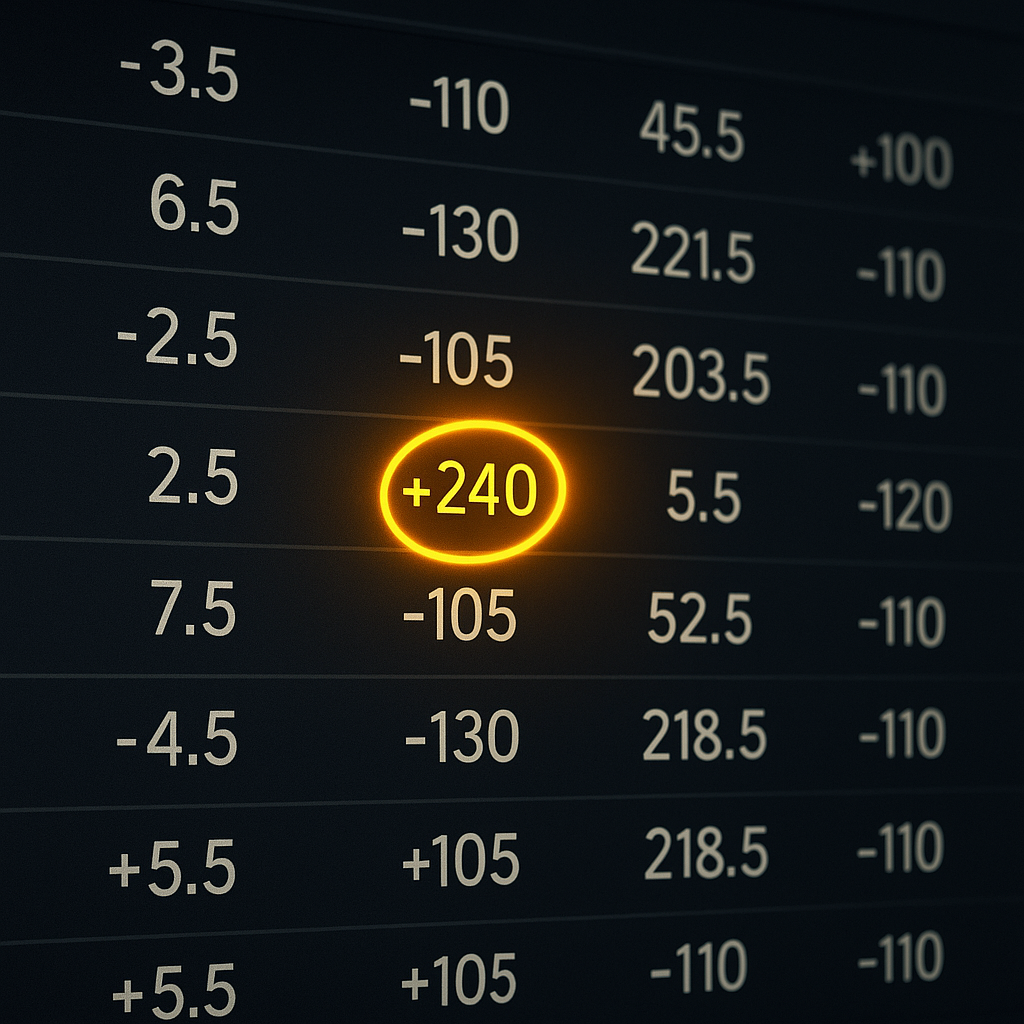
The bookmaker’s margin is commonly called the juice or vig. It’s the built-in edge that ensures the book makes money regardless of the outcome, provided balanced action is taken. Let’s start with a basic example. In an actual 50/50 event, fair odds would be +100 on both sides. Bet $100, win $100. No edge for anyone.
But sportsbooks don’t offer that. Instead, you’ll usually see something like -110 on both sides. Bet $110 to win $100. That extra $10 is the juice. If a sportsbook takes equal money on both sides, it collects more from the losing bets than it pays out to winners. That difference is the margin. Over thousands of bets, it adds up fast. Importantly, the margin exists even when the line feels “fair.” You can agree with the price and still be paying a hidden tax.

Margin Is Built Into Every Market

The margin isn’t just in point spreads. It’s everywhere.
  • Moneylines
  • Totals
  • Props
  • Futures
  • Same-game parlays
In fact, the more complex the market, the higher the margin tends to be. A main NFL spread might have a 4–5% margin. A player prop might be 8–12%. Parlays can exceed 20% once all the prices are combined.
Bookmakers don’t need to predict outcomes perfectly. They only need to price uncertainty with enough padding to protect themselves. That padding is why consistently beating the market is hard. You’re not just trying to be right. You’re trying to overcome a structural disadvantage on every bet.

Why Favorites Are Usually Overpriced

Casual bettors love favorites. They feel safer. A strong team. A star quarterback. A recent win streak. All comforting signals. Bookmakers know this. Because of that bias, favorites are often shaded. Not enough to look obvious, but enough to matter long term. Take a team that should be -150 based on actual probability. A sportsbook might list them at -170 or -180. The public still bets them. The book captures extra margin.
Underdogs don’t attract the same emotional money. That means their prices are often closer to fair, or at least less inflated. This doesn’t mean betting underdogs unthinkingly is smart. Most underdogs still lose. But it does mean the tax on favorites is usually higher. The result is simple. You can win more bets than you lose and still lose money if you consistently pay overpriced odds.

How Lines Are Shaded, Not Just Set

Many people think sportsbooks set a line and then move it only based on betting volume. That’s outdated. Modern books open lines using sharp models and early professional action. Once the number is close, public behavior matters more than balance. If the public loves one side, the book doesn’t always try to attract equal funding on the other side. Instead, it adjusts the price to maximize margin. This is why popular teams, star players, and prime-time games often carry worse prices. Demand lets the book charge more. Margin isn’t static. It flexes with perception.

Where Value Actually Hides

Value doesn’t usually live in obvious places. It hides where attention is low, and pricing is less refined.
  • Less popular leagues
  • Early openers before public money arrives
  • Alternate markets with lower betting volume
  • Props tied to boring players or unpopular outcomes
Value also appears when perception lags reality. Injuries not fully priced in. Matchups misunderstood. Situational spots ignored. Most importantly, value exists relative to the actual price, not the sportsbook’s narrative. If you can estimate probability more accurately than the line implies, you have value even if the bet loses that day. That’s the mindset shift most bettors never make. They chase winners instead of edges.

Why Parlays Feel Good and Pay Badly

Parlays deserve special mention because they are margin machines. Each leg includes juice. When you combine legs, the margin compounds. Then sportsbooks often shave the payout further. Same-game parlays are even worse. Correlation allows books to protect themselves while advertising huge payouts.
They aren’t offering these bets because they’re generous. They offer them because they’re profitable.
Fun? Yes. Efficient? No. If you’re serious about long-term results, parlays should be entertainment, not strategy.

Beating the Margin, Not the Book

You’re not betting against the sportsbook. You’re betting against the price. The book doesn’t care if you win today. It cares whether you consistently beat its numbers. The margin ensures that most bettors won’t. To compete, you need discipline. Price shopping. Patience. And a willingness to pass on bets that feel right but are priced wrong.
The goal isn’t to outsmart the bookmaker on every line. It’s to avoid paying unnecessary juice over time.
Because once you understand how margin is built into every line, one thing becomes clear. The house edge isn’t hidden. It’s right there in the odds.

How to Spot Market Inefficiencies in Online Betting

chart bets - How to Spot Market Inefficiencies in Online BettingMarkets, whether financial or betting, are built on the idea that prices reflect available information. But just like in finance, online betting markets are not always perfect. Odds don’t always reflect accurate probabilities. That gap—where the price differs from reality—is a market inefficiency. Spotting these inefficiencies is what separates casual bettors from sharp ones, a concept often discussed by players sharing their experiences with FunBet and similar platforms.


Understanding Market Inefficiency

An efficient betting market would set odds that perfectly represent the likelihood of an outcome. If a soccer team has a 50% chance of winning, the odds should reflect that. But sportsbooks rely on human oddsmakers, algorithms, and public betting behavior. None of these is flawless—mistakes, biases, and slow adjustments open opportunities for value bets.

Market inefficiency doesn’t mean guaranteed wins. It means there’s a mispriced opportunity that, over time, can lead to a profit if you consistently take advantage of it.

Where Inefficiencies Come From

Several factors create mispricing in online betting markets:

  1. Public bias: Sportsbooks know that casual bettors often favor popular teams or star players. Odds can be skewed to account for heavy betting on these sides, making the underdog more valuable.
  2. Slow line movement: Odds adjust as money comes in, but not every book moves at the same speed. If one site reacts slowly to news—a player injury, weather changes—you might catch favorable odds before they shift.
  3. Niche markets: High-profile events like the Super Bowl are tightly managed. Lesser-known leagues, small tournaments, or prop bets often get less attention and lower pricing. Sharper bettors tend to find edges here.
  4. Bookmaker errors: Sometimes it’s just a mistake. Odds compilers may misjudge a matchup or overlook a key factor. These errors don’t last long, but they do happen.
  5. Arbitrage gaps: Different sportsbooks can post different odds for the same event.

Practical Ways to Spot Inefficiencies

Recognizing inefficiencies requires more than gut feeling. It takes analysis, comparison, and discipline. Here are methods that help:

1. Compare odds across sportsbooks

Shopping around is the simplest way to find inefficiencies. If one bookmaker has Team A at 2.10 and another has 1.90, someone is off. Consistently backing the better number adds up.

2. Track closing line value

Closing odds—where the line settles just before the event—are often the most accurate reflection of probability. If you consistently bet at better odds than the closing line, it suggests you’re spotting inefficiencies early.

3. Watch for overreactions

Markets can swing dramatically after news breaks. For example, if a star player is ruled out, odds might shift too far against their team. Often, the rest of the lineup or situational factors balance things more than the public expects.

4. Analyze low-profile events

Books invest resources in getting big events right, but not every tennis Challenger match or second-division basketball game receives the same attention. If you study a niche sport closely, you may know more than the odds suggest.

5. Use data modeling

Building your own probability models, even simple ones, can reveal differences between your numbers and the bookmaker’s. When your model shows a bigger chance of an outcome than the odds imply, you may have found value.

6. Look for correlated markets

Sometimes related bets aren’t priced consistently. For example, if a soccer match is expected to be low-scoring, odds on “under goals” and “draw” might not align perfectly. Checking linked markets can expose inefficiencies.

Avoiding Pitfalls

Spotting inefficiencies is one thing. Exploiting them without falling into traps is another. A few cautions:

  • Don’t chase every difference. Just because odds vary doesn’t mean there’s real value. Focus on the disagreements that your research or model supports.
  • Bankroll discipline matters. Even if you’ve identified value, outcomes are uncertain. Proper staking keeps you in the game long enough to benefit from long-term edges.
  • Stay objective. Many bettors fall into the same trap as casual fans—betting based on preference or narrative. Efficiency hunting requires a cold, statistical approach.
  • Be aware of limits. If you consistently beat inefficiencies, some sportsbooks may limit or ban your account. Spreading your action helps.

The Role of Technology

Modern bettors have more tools than ever to spot inefficiencies. Odds comparison sites, betting exchanges, and statistical databases give real-time insights. Automated alerts can notify you when lines drift beyond certain thresholds. While these tools don’t guarantee success, they improve efficiency in finding opportunities before the market corrects.

Long-Term Perspective

Market inefficiencies are not jackpots waiting to be grabbed. They are small edges repeated over time. Think of them like compounding interest. One good value bet won’t change your bankroll overnight, but hundreds of them can produce steady growth over time.

The key is to accept variance. Even the best value bets lose often. The goal is not to win every wager, but to consistently place bets where the odds are in your favor. Over months and years, that discipline is what separates profitable bettors from the rest.

Final Thoughts

Online betting markets are competitive and often efficient. However, inefficiencies exist for those willing to dig deeper, analyze more closely, and remain patient. By comparing odds, studying niches, monitoring market reactions, and employing data-driven methods, you can uncover opportunities that are often hidden in plain sight.

The edge is small, but it’s real. If you can spot inefficiencies and manage your bankroll wisely, betting becomes less about luck and more about exploiting the gaps in the market.

𐌢